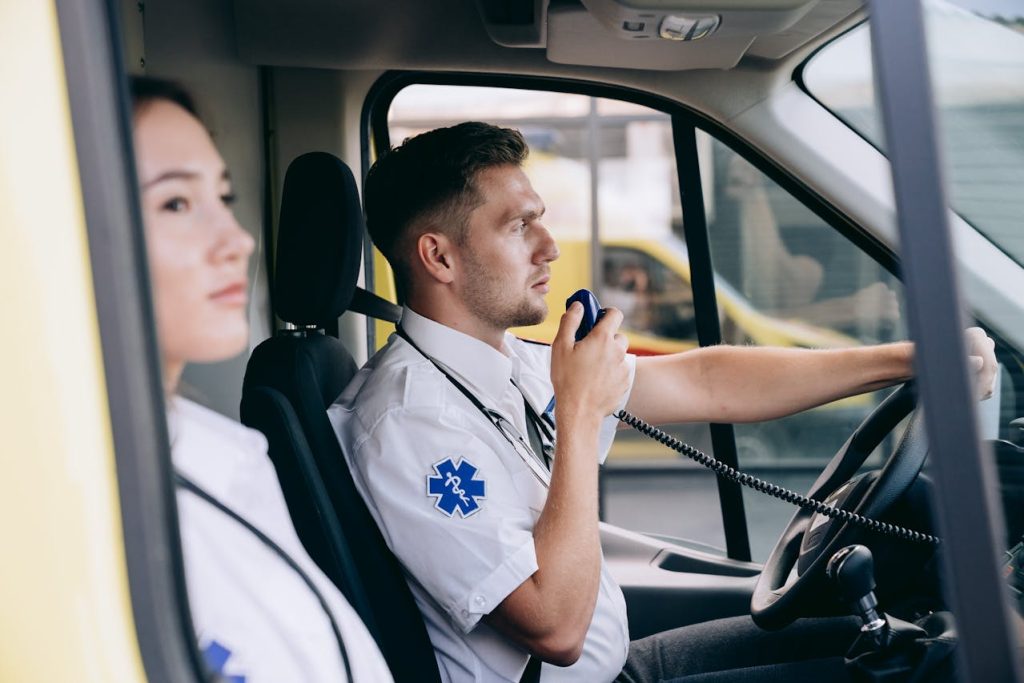
Building a stronger paramedic pipeline has become more than a staffing concern. It reflects whether communities can rely on timely, capable emergency response in a period where turnover, retirements, and rising call volumes keep reshaping the field.
The training environment itself now sits at the center of long-term stability. That is where educators like Sean Reffner have been focusing their attention.
Why the Workforce Pipeline Needs Fresh Thinking
Federal labor projections estimate about 19,000 EMT and paramedic openings per year over the next decade, driven mostly by attrition rather than new demand. While national certification counts rose to more than 456,000 EMS professionals in recent years, many agencies still report chronic shortages. The tension between growing certification totals and thinning agency rosters suggests something more complicated beneath the surface.
Reffner describes the issue in straightforward terms: “People enter this profession with passion, but the training pipeline has to set them up for a career, not just a test.”
He points to state-level examples where the number of active responders has dropped sharply, despite consistent enrollment. New York’s workforce review, for instance, showed a 17.5 percent decline in active certified responders between 2019 and 2022, a pattern echoed across several states.
If entry-level training and early-career support do not line up with the realities of fieldwork, new paramedics may exit long before they hit proficiency. The workforce challenge, then, becomes a training challenge.
The Framework Behind Modern Paramedic Education
Paramedic programs follow a national backbone anchored in the National EMS Education Standards and the Scope of Practice Model. These documents establish what every program must teach and the clinical responsibilities graduates should be ready to perform.
It sounds simple. In practice, uniform standards still leave a widespread in how programs deliver instruction, structure clinical rotations, and prepare students for field internships.
Accreditation plays a major role here. CoAEMSP and CAAHEP set the quality bar for paramedic education, and their expanding oversight into AEMT programs marks a shift toward broader consistency.
Accreditation does not guarantee identical outcomes. Programs with similar resources can still produce different student experiences, often depending on local hospital access, preceptor quality, and clinical call diversity.
The Ongoing Question of Degrees vs. Certificates
A recurring debate centers on whether paramedics need a college degree or whether certificate pathways remain effective for preparing field-ready clinicians. Some states have moved toward associate degree requirements, arguing the profession benefits from deeper clinical reasoning and broader academic grounding. On the other hand, EMS leaders warn that higher entry requirements could shrink the talent pool at the exact moment agencies are short-staffed.
Sean Reffner frames the tradeoff carefully. “Raising the bar makes sense only if you make the doorway wide enough,” he notes. The comment echoes a growing sentiment: professionalization alone cannot solve workforce gaps. Programs must balance rigor with affordability and geographic access.
Inside Clinical Training: What Students Actually Need
Training no longer revolves around “ride-alongs” alone. Modern programs weave together hospital rotations, field internships, and structured supervision. Students now spend time in emergency departments, critical care units, and specialty settings where they learn to manage complex cases.
The biggest variable is case exposure. Programs cannot rely on chance for students to encounter high-acuity calls, so they compensate by building tighter relationships with hospital partners or redesigning internship models. When rotations were disrupted during the COVID period, several studies showed competency could be maintained, but only when programs adapted intentionally through scenario design, guided observation, or faculty-led case reviews.
A closer look shows the real differentiator is the preceptor. These experienced field providers introduce students to the “hidden curriculum,” such as communication habits, split-second judgment, and the subtle ways clinicians position themselves during chaotic scenes. Strong preceptors accelerate readiness. Weak or inconsistent ones can do the opposite.
Simulation as a Core Competency Tool
Another trend reshaping paramedic education is the rise of high-fidelity simulation. Programs once used simulation mainly for procedural practice. Now it fills gaps in exposure to rare but critical events, such as cardiac arrest variations, pediatric emergencies, behavioral health crises, and multi-patient incidents.
Simulation is tied to improved clinical confidence and stronger decision-making. Some workforce analyses even link it to better retention, noting that realistic practice environments help new clinicians feel more prepared for emotional stressors.
How Expanded Roles Are Changing What Students Must Learn
The responsibilities of paramedics now reach beyond emergency transport. Community paramedicine and mobile integrated health programs continue to expand, giving paramedics new responsibilities in chronic disease support, patient follow-ups, mental health touchpoints, and in-home assessments.
Training programs have been adjusting. Students are learning more about behavioral health, chronic illness patterns, home-based triage, and social determinants of health. Several states report that these expanded roles also improve retention because they offer diverse career paths that keep experienced clinicians engaged.
Addressing Mental Health and Burnout Early
Burnout has become a defining challenge for EMS. A U.S. study found nearly 60 percent of EMS clinicians showed signs of burnout, one of the highest rates among healthcare professions. Paramedics reported more severe symptoms than EMTs, which underscores the pressure students will face as they advance.
Training programs are responding by integrating resilience strategies into the curriculum. Stress-exposure practice, reflective debriefs, peer-support habits, and frank conversation about sleep and fatigue risks all play a role. The goal is not to eliminate stress but to prepare new clinicians for the emotional pacing of the job.
Expanding Recruitment and Modernizing Instruction
Attracting the next generation means reaching students earlier. High-school programs, dual-credit EMT pathways, military transition tracks, and paid apprenticeships are becoming more common. These approaches widen the pool and introduce EMS careers to students who might not otherwise consider them.
Instruction is changing as well. Hybrid learning models, virtual labs, and adaptive assessment tools are increasingly common, making coursework more accessible to working adults. Diversity in the student population is also becoming a priority, with evidence suggesting it improves patient trust and cultural responsiveness.
Final Thoughts
Preparing the next wave of paramedics calls for attention to the full arc: how people enter the profession, how they develop clinical judgment, and how they sustain themselves in demanding environments. The insights from Sean Reffner highlight a simple undercurrent: training programs shape not only competency but career longevity. That perspective gives the field room to rethink how paramedics are educated, supported, and retained as the role continues to evolve.